


/ DESIGN ● A KURLECTIVE STORY
A Home That Looks Like Someone Actually Lives There.
The rooms we love most often look less like showrooms and more like a record of somebody's tastes, habits and life.

There are rooms that photograph beautifully and rooms that make you want to stay for another cup of tea. The first may have immaculate cushions, a perfectly centred vase and a coffee table nobody would dare put a coffee on. The second probably has a book with a folded corner, a chair in precisely the right place for the afternoon light and something peculiar on the mantelpiece.
Neither room has to be expensive. Neither needs to be messy or maximalist. But one offers evidence of a life taking place inside it, and that is a harder quality to buy all at once.
Begin with how the room is used
Before thinking about a palette, think about a Tuesday evening. Where do people put their keys? Who curls up with a book? Does the dining table become a desk, a craft surface or a place to sort school papers? A room that understands its routines can feel generous even when it is small.
That might mean a side table exactly where a mug needs to land, a lamp beside the chair that gets used most often, or storage that keeps everyday clutter within easy reach but out of sight. These decisions are not merely practical. They make a home comfortable enough for its occupants to relax.
In a rented space, the possibilities may be modest: a better lamp, a movable bookshelf, washable covers or art hung using an appropriate removable system. A successful room does not require structural changes.
Lighting gives a room its different moods
One bright ceiling light often asks a room to behave the same way all day. A little variety lets the space change with its occupants. A reading lamp can create a quiet corner. A table lamp can soften an evening without turning the whole room into a darkened restaurant. Natural light can influence where furniture feels most inviting.
There is no universally correct collection of lights. Start with what you need to do. Can you read comfortably? Can you cook safely? Do you want a gentler light while talking with friends? When a light source solves a real problem, it can also become part of the room's visual character.
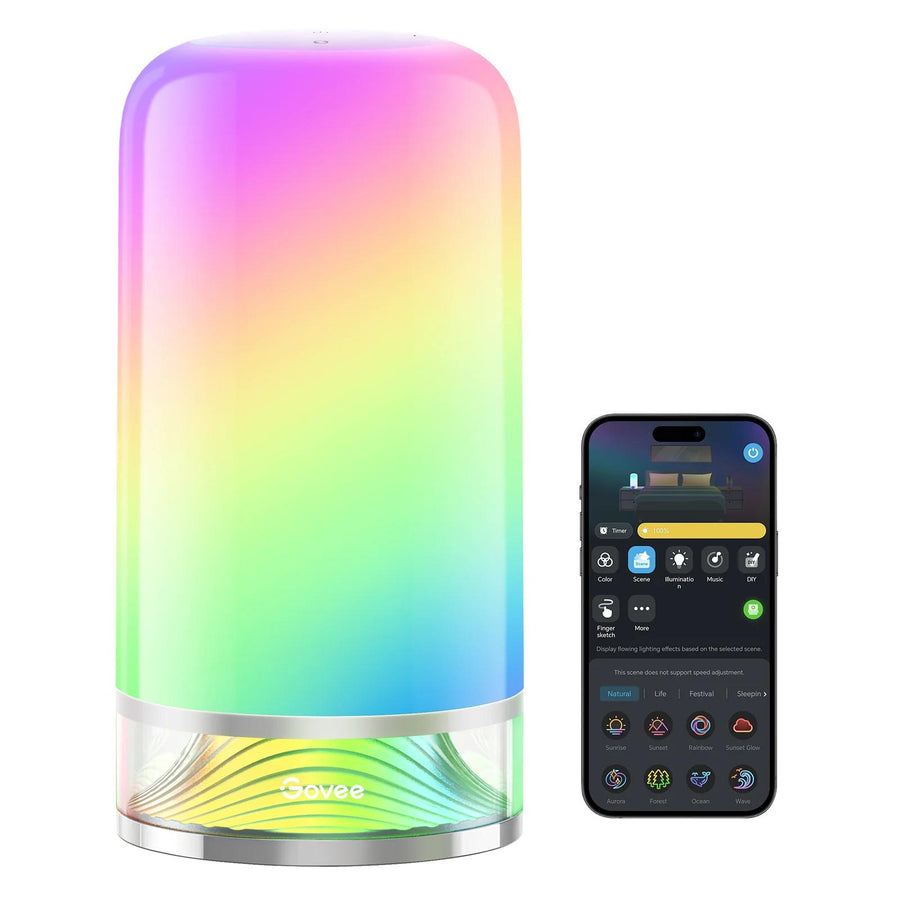
Consider a small table lamp as a starting point for thinking about atmosphere, not as a promise that any one product will transform every space. Its place and use will matter as much as its appearance.
Objects should have a reason to be there
Not every reason must be practical. A pebble from a memorable beach, a slightly uneven handmade bowl, an inherited photograph or a peculiar ceramic animal can be worth keeping simply because it means something to someone.
Personal objects resist the logic of matching sets. They may disagree in colour, origin and style. That is not necessarily a problem. Their relationship can come from scale, a shared material or simply the fact that the same person chose them.
Display a small number in places where they can be seen and enjoyed. Change them occasionally if the room begins to feel crowded. Sentimental value is not diminished because an object spends part of the year carefully stored.
A room starts to feel personal when the things inside it are allowed to have histories.
Let texture do some of the work
Rooms become more interesting when surfaces feel different. A soft throw against a firm chair, smooth pottery beside a wooden table, a woven basket near painted shelving. Texture gives the eye somewhere to pause without demanding an elaborate decorating scheme.
Contrast can be subtle. A clean, modern sofa may look warmer with an old wooden side table. A busy collection of books may benefit from an uncluttered wall nearby. Mixing does not mean putting everything on display at once.
Try moving things before buying replacements. An armchair shifted towards daylight, a rug rotated or a shelf edited down to a few favourite pieces can make the room feel unexpectedly new.
Scale is more important than a trend
A large piece of furniture can be beautiful in the wrong room and awkward for years. A tiny side table may look exquisite online but fail the test of holding a book and a cup together. Measure before buying, and consider how people actually move around the space.
Leave enough room to open drawers, walk past chairs and use doors comfortably. If the household includes children, pets or people with mobility needs, those practical details become even more valuable. A stylish home need not be a difficult home.
When looking at a woven chair or a small pedestal table, think about proportion, surface care and position in the room. A beautiful photograph can inspire an idea; it cannot measure your floor.
Books, pictures and the pleasure of an unfinished collection
There is no obligation to buy books for the colour of their spines or art to coordinate with a cushion. Collections are more compelling when they grow from curiosity. The books you read, the photographs you take, a print discovered while travelling or work by a local artist all tell a more interesting story than a perfectly anonymous arrangement.
If you have just moved in, resist the pressure to fill every wall. Empty space can be useful while you discover where the light falls and which corners feel right. Rooms tend to benefit from being understood before they are completed.
Equally, some homes are full of life from the first week: children's drawings, plants, blankets, practical shelving, souvenirs. The aim is not a particular level of restraint. It is to make space for the things that genuinely matter to the people living there.
Comfort is a design decision
The most carefully styled room is unlikely to become a favourite if nobody wants to sit in it. Test the chair. Consider whether a table is easy to clean. Choose textiles you can live with. Make room for the cup of tea, the puzzle, the open laptop, the flowers and the unexpected guest.
Sometimes the best improvement is not something new. It is moving a chair, repairing a lamp or finding a proper home for the pile that keeps appearing beside the door. Sometimes it is buying the perfect object after years of knowing exactly where it should go.
What makes a home memorable is rarely a faultless arrangement. It is the feeling that someone has made choices there, learned from them and settled in. The lovely room is not the one where everything is finished. It is the one where life feels welcome.
For a companion piece on the objects that deserve space in our homes, explore What Makes Something Worth Owning?.
/ INSPIRED BY THIS STORY
Shop the story.
Pieces worth a closer look, inspired by this story.


Browse these pieces on Kurlective. Check current availability with the retailer. Kurlective may earn a commission from qualifying retailer links.